Recovering From Spiritual Burnout: A Gentle Path Forward
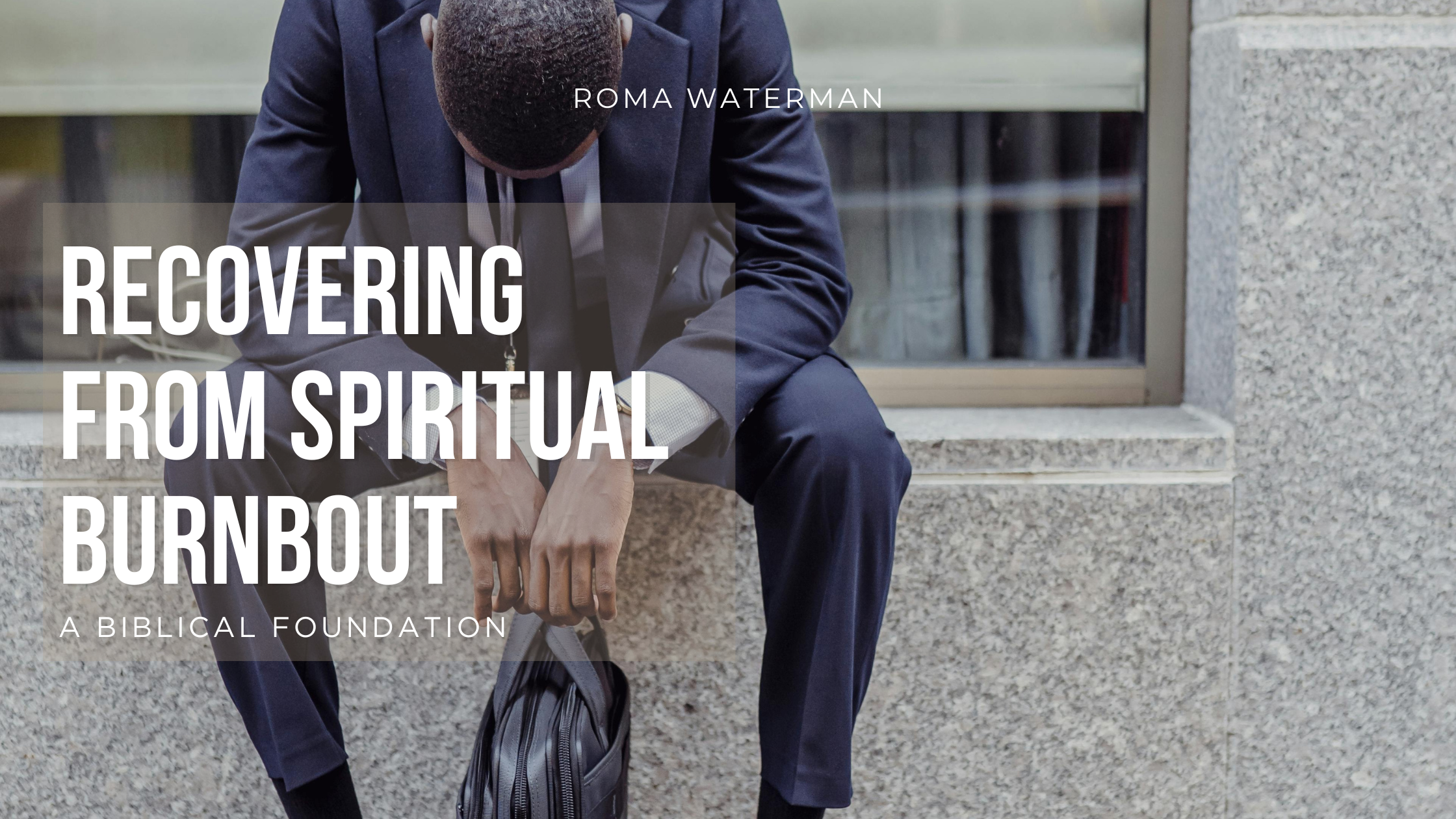
You haven't lost your faith. Let me say that clearly, because the enemy would love for you to believe otherwise.
But you are tired. Bone-tired. The kind of tired that sleep doesn't fully fix and that you've learned not to mention out loud, because how do you explain to someone that you've been faithful for years -- genuinely, consistently, at real cost -- and yet you feel like you're running on empty? That the very things that used to fill you now feel like obligations? That prayer, which was once the most natural thing in the world, now feels like a room you're not sure how to enter?
This is what spiritual burnout feels like. And it is far more common than most of us ever say out loud.
What spiritual burnout actually is
Spiritual burnout is not a crisis of faith. It is a crisis of capacity. It happens when we have given more than we have been replenished, when the output has consistently exceeded the intake, until the well runs dry and we're still drawing up the rope.
It tends to happen to some of the most sincere, committed, gifted people in the church. The intercessors. The ones who hold everyone else's pain. The worship leaders, the Bible study leaders, the quiet faithful who've served behind the scenes for so long they can't remember the last time someone asked how they were doing.
Recent research from Barna Group found that 1 in 4 pastors in the United States seriously considered leaving ministry in 2025. And research from the Evangelical Council for Financial Accountability found that 94% of ministry leaders experience high stress. But this isn't only a pastoral crisis. It is a pew crisis too: a quiet epidemic among the people in our churches who serve faithfully and consistently, week after week, without anyone asking if they're okay.
If that’s you, I want to say this again - the burnout isn't a sign you're doing it wrong. It's a sign you've been carrying more than any one person was designed to carry alone. But there is hope! I believe you can recover and live a flourishing life serving in God’s kingdom.
You're not the only one who has ended up in the cave
One of the most honest, tender passages in all of Scripture is 1 Kings 19. Elijah, the prophet who had just called fire down from heaven, who had just seen God move in extraordinary ways. He runs into the wilderness, sits down under a tree, and asks God to let him die.
He says, "It is enough; now, O Lord, take away my life, for I am no better than my fathers." (1 Kings 19:4, ESV)
This is not the language of unbelief. It is the language of exhaustion.
And notice what God does. He does not rebuke Elijah. He does not give him a sermon. He does not tell him to pray more or try harder. He sends an angel who touches him, provides food and water, and says: "Arise and eat, for the journey is too great for you." (1 Kings 19:7, ESV)
The journey is too great for you. Those words deserve to be read slowly. God acknowledged the weight. He did not minimise it. And His first response was not instruction: it was restoration.
The cave is not a sign of failure. For Elijah, it became the place where God met him most tenderly. It is the same for you and I.
Signs you may be experiencing spiritual burnout
Burnout rarely announces itself clearly. It tends to creep in gradually, showing up in small ways that are easy to explain away. Some things to watch for:
Prayer feels flat or forced: you're going through the motions but the connection you once felt isn't there;
Worship that once moved you now leaves you unmoved, or even irritated;
You feel a low-grade sense of resentment toward the very things you love - the church, the ministry, the people you serve;
Scripture feels dry. You open it out of discipline, not hunger;
You're spiritually lonely even when you're surrounded by Christians: a quiet sense that nobody around you quite sees what you're carrying;
You've been tired for so long it has started to feel normal.
These are not failures of faith. They are signals. Your soul is telling you something important, and it is worth listening.
A gentle path forward
I want to be clear about something: the path back from spiritual burnout is not a programme. It is not a five-step plan. Formation is slow, circular, and deeply personal, and what you need right now is probably less than you think, not more.
Come with me on this for a moment…
Start by naming it honestly
The first and most important step is to stop pretending that everything is ok. Name what is actually happening, to God and to yourself. You don't have to have a tidy explanation for it. You just have to be honest. Elijah was honest - searingly so. "I have been very zealous for the LORD God of hosts," he said, "and I alone am left." (1 Kings 19:10, ESV) His perspective wasn't entirely accurate. But his honesty was completely real. God can work with honesty. But He struggles to reach us when we're performing.
Tend to the basics
God's first response to Elijah's burnout was not a theological lesson. It was food, water, and sleep. Before we reach for complex spiritual remedies, it is worth asking: am I resting enough? Am I taking care of my body? Am I carrying things I was never meant to carry alone?
The most spiritual thing you can do in a season of burnout is sometimes the most ordinary: Sleep. Eat well. Go outside. Let the pace slow. This is not laziness, it is wisdom. You cannot draw from a dry well.
Return to the small, quiet things
Burnout often happens because we have been living at the level of output, always giving, always doing, always producing. The path back is usually found at the level of input: small, quiet practices that allows God to minister to you rather than through you.
A short time of silence in the morning. A slow, unhurried reading of one psalm. A walk where you're not listening to a podcast but simply noticing the world God made. These aren't passive things: they are some of the most actively restorative things available to us. The ancient contemplative traditions of the church understood this. They knew that the interior life has to be tended before it can overflow.
Let someone know
Elijah believed he was the only one left. He wasn't. God reminded him that there were seven thousand in Israel who had not bowed to Baal - a community he didn't even know existed. Isolation is one of burnout's most powerful lies. It tells you that you're the only one, that no one would understand, that admitting this makes you weak.
Find someone safe and tell them the truth. A trusted friend, a spiritual director, a counsellor who understands faith. You were not made to carry this alone.
Give yourself permission to receive
This one is particularly hard for those who have spent years being the one who gives. I have been this person. Receiving for me is very very difficult – I have had to learn it! But the invitation of the contemplative life is precisely this: to come before God without an agenda, without an output, without a role to perform. Simply to receive. To let Him restore your soul.
Psalm 23:3 says it plainly: "He restores my soul." (ESV) That is His work. Not yours. Your only task in this season is to let Him.
Recovery is not a sprint
You did not arrive at burnout overnight, and you will not recover from it overnight. That is not discouraging news, it is honest news. And honesty is the only ground on which genuine restoration can happen.
What I want you to hear is this: the fact that you are still here, still seeking, still caring enough to read something like this: that matters! The desire you have for more of God, for a faith that is real and not just functional, is itself a gift. Don't harden it with shame. Let it lead you back to the well.
Wisdom at the Well is a contemplative-charismatic community built for exactly this kind of season. Not a place to perform or produce, but a place to slow down, go deep, and let God restore what the years of striving have worn thin. If this resonates with you, you are welcome! You can find out more HERE.

Wondering how God speaks specifically to you?
The Discover Your Spiritual Listening Style quiz identifies your unique way of receiving from God, whether you tend to be a Seer, a Listener, a Feeler, a Knower, or a Doer, so you can begin to recognise what has already been happening in you.
FREQUENTLY ASKED QUESTIONS
Q: Is it normal to feel burnt out as a Christian?
A: Yes, and far more common than most churches acknowledge. Spiritual burnout affects some of the most committed, sincere, and gifted people in the church. It is not a sign of weak faith. It is a sign that you have been giving more than you have been replenished. Even the prophet Elijah experienced it, after one of the greatest displays of God's power in the Old Testament, he ran into the wilderness and asked God to let him die. God's response was compassion, rest, and food. Not rebuke.
Q: What is the difference between spiritual dryness and spiritual burnout?
A: Spiritual dryness is usually a season -- a temporary sense of distance from God that many believers experience as part of the ordinary rhythm of faith. Spiritual burnout is deeper and tends to be cumulative. It is often accompanied by exhaustion, emotional numbness, resentment toward ministry or spiritual practices, and a sense that you have nothing left to give. Both are real, and both deserve gentle attention rather than simply pushing through.
Q: How long does it take to recover from spiritual burnout?
A: There is no fixed timeline, and anyone who tells you otherwise is not being honest with you. Recovery from burnout is slow, non-linear, and deeply personal. Some people begin to feel the shift within weeks of giving themselves permission to slow down and rest. For others, it is a longer journey that may involve professional support, significant changes to pace and commitments, and a genuine restructuring of how they engage with God and community. The most important thing is not speed, it is direction.
Q: Should I take a break from church or ministry if I'm burnt out?
A: This is a question worth sitting with prayerfully, and ideally with the support of someone you trust. In some cases, a temporary step back from ministry roles is genuinely the most healing thing available. In others, the community itself is what holds you while you recover. What almost universally helps is reducing or removing the performance pressure: the expectation to show up polished, producing, and okay. If your current church environment doesn't allow you to be honest about where you are, that itself is worth examining too.
Q: Can contemplative practices help with spiritual burnout?
A: Yes! Many people find that the contemplative traditions of the church offer exactly what burnout depletes: a way of being with God that doesn't require output. Practices like Lectio Divina, breath prayer, the Daily Examen, and simple silence create space for God to restore rather than simply inform or activate. The ancient Desert Fathers and Mothers understood this. They developed these practices precisely because they knew that the interior life has to be tended before it can overflow. They are not modern inventions, they are ancient wisdom for exhausted souls.